Lessons from termites
Focus on building the long term health and prosperity of your organisation or community
©DR Phelan 2020
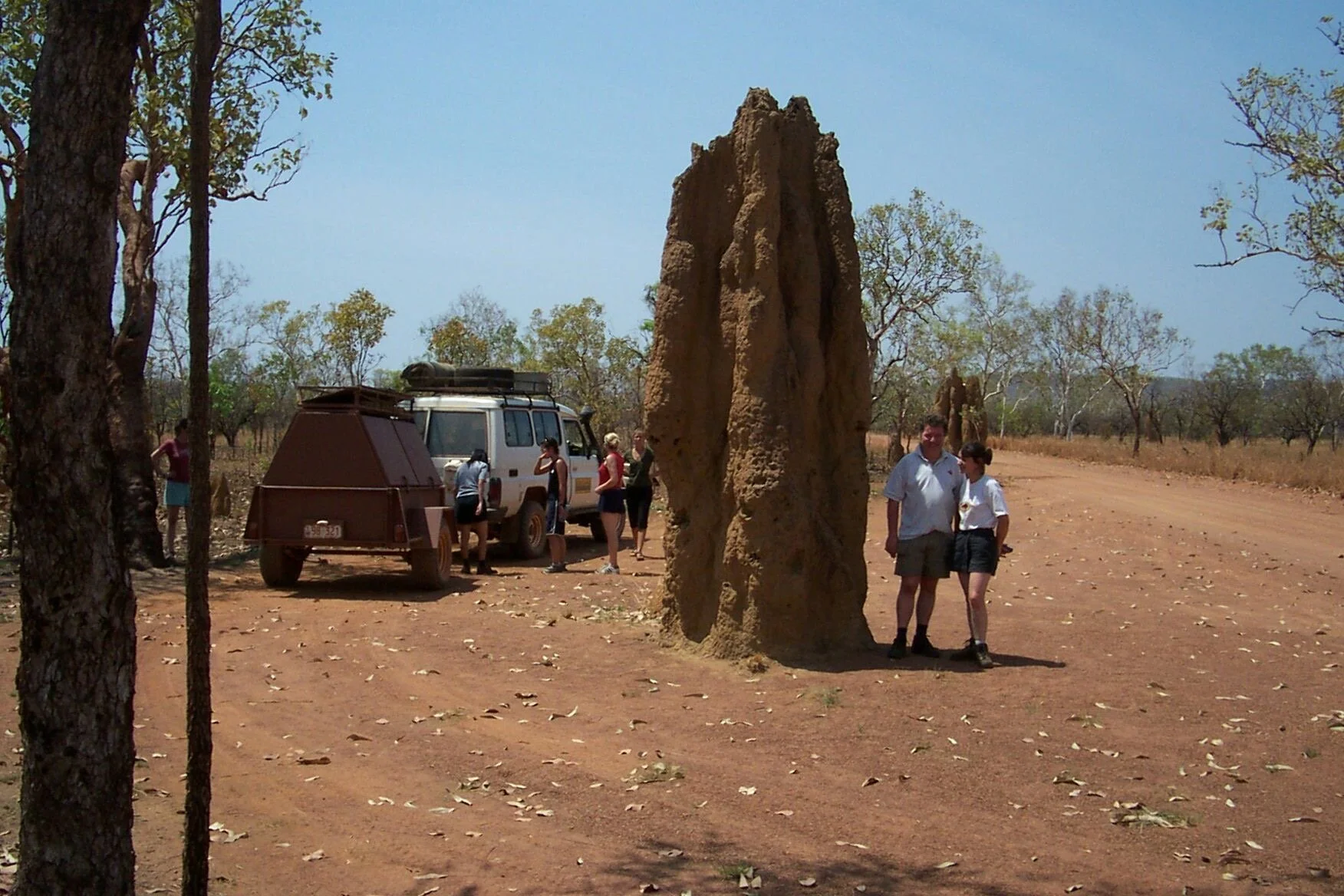
I was looking at some photos recently and came across some taken when we were in Kakadu and Litchfield National parks in the Northern Territory some years ago.
We really do live in a magnificent country - timeless mountains, gorges, waterfalls, and rivers full of fish (and crocodiles), birds and wildlife. We saw aboriginal drawings from tens of thousands of years ago. We also also saw many termite mounds. Some were small and new. Some looked old with a few members. Some were over five metres tall and, we were told, over 50 years old with thousands of members. All groups of ants were part of the wide termite family. Yet each mound was operating as a fairly autonomous group.
We learned that each of these mounds are quite sophisticated organisations. The structures have been built to preserve the core at a constant temperature. The position and outcrops of the mound are not random but rather aligned with the earth’s magnetic poles and rotation in relation to the sun, so that a minimised face is exposed during the hottest part of the day and appropriate levels of shade are created. They are also shaped to cope with the prevailing winds in their area.
We also learned that throughout the termite organisation, there is continuous monitoring of "KPIs" (key performance indicators) such as internal core temperature, food supplies, health of the queen etc. Each generation of ants seems to know what to do and when to do it. There is constant building, food gathering and micro-adjustment work being carried out by all the members to ensure optimal organisational performance and advancement of the common termite cause.
Interestingly, if there is a significant change in the environment, (e.g. a falling branch breaks off one section), workers don’t just begin fixing or replacing what was broken. Instead, the mound may be adjusted in many other areas to bring the core as efficiently as possible back into the optimal zone. Some form of common understanding of the whole and systems thinking seems to prevail. So, the core is preserved whilst some of the organisational structure, internal workflows and individual work routines are changed for the good of the whole.
The termites bought to mind the globally acclaimed research done by Jim Collins and Jerry Porras’back in 1995 and published in their best selling book "Built to Last". They found three major characteristics of organisations that survived and prospered over the longer term (50+ years). These organizations:
1. Preserve the core and stimulate growth.
Great organizations fervently preserve their core whilst at the same time stimulating progress in non-core areas. They take steps to make their ideology pervasive throughout the organization and beyond, and they transcend any individual leader. However, they also stimulate experimentation and learning, so that in a changing world, they are prepared and able to change everything about themselves except their core values (essential and enduring tenets) and purpose (fundamental reasons for existence). In multiple ways these organisations deliberately build and powerfully reinforce a distinctive organisational culture that embodies their core ideology. At the same time they have a commitment to challenging, audacious and often risky goals and projects toward which they channel their efforts (stimulate progress). Collins called these - big, hairy, audacious goals - "BHAGs". For example, Ford’s "car for the average family man", JFK’s "man on the moon", Bill Gates "computer on every desk", Steve Jobs "iPhone" computer in your pocket, or better still..... Jesus' "love your Neighbour as yourself".
2. Build the organisation and its capability
For the builders of great organizations, their greatest creation is the organization itself and what it stands for.....in our case "The Church". The creating and building of a great organization does not require either a great programme or a great and charismatic leader who can "tell the time" to everyone. The whole is much greater than any individual. Building an organisation that can prosper far beyond the presence of any single leader and through multiple cycles is "clock building". The builders of great organizations tend to be clock builders not time tellers - they build a clock so everyone can see the time (truth).
3. Maintain consistent alignment.
Great organizations seek consistent alignment — All the elements of each group, work together in concert within the context of the organization's core ideology and the type of progress it aims to achieve. Constant monitoring of critical KPIs is maintained and adjustments made to ensure optimal organisational performance. It is also a never-ending process of identifying and doggedly correcting misalignments. If building layout impedes progress, change the layout or move. If the strategy is misaligned with the core, change the strategy. If behaviours are being rewarded that are inconsistent with the core, change the system. If the structure inhibits progress, change the organisation structure. The only sacred cow is the core ideology (MISSION). Anything else can be changed or eliminated.
If we travel forward 25 years, we think it’s fair to say that these three principles are still true.
What are you doing to build the long-term health and prosperity of your organisation?
Ps As I turned my mind back to the termite mounds, I idly wondered whether there are any demotivated termites and how the organisation manages these members….