
From Hero to Wise Elder
From Role to Soul - An invitation to deeper meaning, generous living and the further journey
©DR Phelan | Uplift Centre 2025

Obi-Wan Kenobi (Star Wars): Evolves from warrior to wise mentor - How courage can develop into mentoring — and the challenges of guiding another person.
There may come a time when the questions that once guided us begin to change.
What can I achieve? makes room for: What matters enough to give myself to?
How do I prove myself? softens into: How might I live more truthfully?
And alongside What will I do next? another question appears: What kind of presence do I want to bring to the life I have now?
These questions may arrive with retirement, a loss, changing health or a relationship that has altered. They may also emerge quietly, while life looks much as it always has. We notice that something within us is asking for attention.
This resource explores that invitation through the image of the journey from hero to wise elder.
Here, hero names the courage with which we enter life, develop our gifts and meet its challenges. Wise elder describes a way of becoming more thoughtful, compassionate and generous with what life has taught us.
These are possibilities within us. Although for many of us these insights are learned in the second half of life, they do not belong exclusively to particular ages, and there is no timetable we must meet.
You might read slowly, pausing wherever something touches your own experience. One question carried thoughtfully into your day may be enough.
1. Honour the life you have built
Before asking what needs to change, take a moment to recognise what has brought you here.
Perhaps you have built a career, raised children, cared for someone, created a home or worked hard to find your place. Perhaps your courage has been less visible: surviving difficulty, beginning again, asking for help or continuing when life felt overwhelming.
These things matter.
The earlier tasks of life—developing confidence, finding belonging, learning responsibility and making a contribution—deserve respect. Richard Rohr’s account of spiritual maturity includes honouring these foundations while making room for deeper growth. Richard Rohr, “Honoring the First Half”.
Sometimes, however, a strength becomes a demand we can no longer question. Being dependable becomes I must never need help. Being capable becomes I must always have the answer. Achievement becomes the measure of whether we deserve love.
The further journey invites us to appreciate these strengths and give them greater freedom.
Our courage can help us speak honestly. Our competence can help someone else flourish. Our determination can support a cause we may never see completed.
Pause and reflect
What in my life deserves acknowledgement, even if nobody else has noticed?
Which strength still serves me well—and where might I be asking too much of it?
A small practice
Write a few sentences of thanks to your younger self. Include something you now understand about what they were trying to manage.
2. Allow yourself to be between chapters
Some changes happen quickly. Learning to live with them can take much longer.
A job ends, but our sense of identity remains attached to it. Someone dies, and the world carries on while ours feels unrecognisable. A familiar responsibility falls away, leaving relief and emptiness together.
William Bridges distinguishes an external change from the inner transition it requires. His framework describes endings, an unsettled interval and new beginnings. It offers a helpful language for times when the old life no longer fits and the next shape is unclear. William Bridges’ transition model.
During such times, we may feel pressure to find the lesson, make a plan or become positive.
There can also be value in saying: Something important has ended. I am still finding my way.
Pain does not automatically make us wiser. We do not have to call a loss a gift. What we can offer ourselves is time, care and companionship while we discover what remains possible.
Pause and reflect
What am I losing, releasing or learning to live without?
What would help me feel supported while I do not yet know what comes next?
A small practice
Complete these three sentences:
I am saying goodbye to…
I do not yet know…
For now, I can care for myself by…
Let the answers remain unfinished.
The Change Wheel may also be helpful if you’re experiencing a significant change right now.
3. Discover who you are beyond your roles
Our roles give life structure and meaning. They can also become so familiar that we struggle to imagine ourselves without them.
Who am I when I am no longer the leader, the organiser, the provider or the person everyone turns to?
Connie Zweig describes the inner work of ageing through the movement from “role to soul”. Her work invites attention to the fears and resistance that changing roles can uncover. Connie Zweig, The Inner Work of Age.
Here, soul can name the depth of our life: what feels most truthful, meaningful and connected to something beyond immediate approval. For some, this language is inseparable from God; others may recognise it through conscience, love, creativity or belonging.
This exploration is sometimes uncomfortable. We may discover resentment beneath helpfulness, fear beneath control, or a longing we have repeatedly postponed.
We may also rediscover tenderness, playfulness and gifts we have neglected.
Imagine someone who has always organised family gatherings beginning to ask what others would enjoy—and discovering the pleasure of being welcomed as a guest. Something of their generosity remains, while its expression changes.
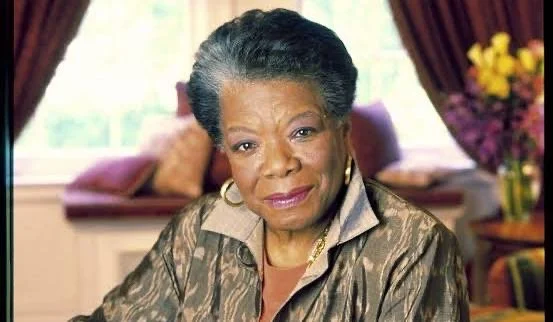
Maya Angelou:
Survivor of childhood trauma and early hardship, Mary Angelou had various roles and tried on many “masks” - dancer, singer, actress, political activist. In her 40s she wrote "I Know Why the Caged Bird Sings", telling her story with unflinching honesty. She became a global elder-poet, revered for her courage to speak truth and embody dignity. Her authenticity inspired countless women to embrace their own voice.
Pause and reflect
Which role has become so important that I find it difficult to be myself without it?
What part of me would welcome more room?
A small practice
Make two short lists: Roles I hold and Qualities I value. Notice which qualities you can continue expressing even when a role changes.
4. Let experience become understanding
Living through something and understanding it are different experiences.
We can carry a story for years without noticing how it shapes our expectations. We can also return to an old experience and see something we could not see before.
Reflection creates room for this second look.
James Hollis invites us to examine the expectations and inherited patterns that have shaped our lives. Such questioning can help us choose more consciously how we wish to live now. James Hollis, Finding Meaning in the Second Half of Life.
We might recognise that we were doing our best with limited understanding. We might also recognise harm for which we need to take responsibility. Compassion and accountability can grow together.
A note about our changing strengths
Psychologists distinguish between fluid abilities, involved in reasoning through unfamiliar problems, and crystallised abilities, involving accumulated knowledge.
The picture across adulthood is varied: different abilities reach their highest measured performance at different times. There is no single age at which every aspect of thinking peaks. MIT’s account of research by Joshua Hartshorne and Laura Germine.
This gives us reason to be curious about our changing capacities rather than reduce ourselves to an age-based story.
For this resource, wisdom means learning to bring experience into conversation with humility, compassion and sound judgement. It includes being willing to revise what we think we know.
Pause and reflect
What experience do I understand differently now?
Where might greater honesty—or greater kindness—change the story I tell about myself?
A small practice
Choose one experience and write under three headings:
What happened; what I believed then; what I understand now.
Leave room for another perspective.
5. Make room for others without disappearing
A meaningful part of elderhood is learning how to support another person’s growth.
David Tensen’s Decenter Everything explores eldering through loosening the demand to occupy centre stage, including in how we relate to being heard and to knowing. David Tensen’s description and contents.
One everyday application is listening with enough patience for someone else to discover what they think.
It may mean asking before advising, sharing responsibility, or allowing a younger person to approach a task differently. Across generations, learning can move both ways.
There is room here for discernment. If you have spent much of your life silencing yourself, growth may involve speaking more clearly and claiming appropriate space. Generosity needs healthy boundaries.
The question becomes: What would help life flourish in this situation? Sometimes the answer is to step forward. Sometimes it is to accompany, encourage or make room.

Making room for an unexpected companion
Carl Fredricksen — the fictional character in Up - offers an image of a life that still has room for surprise. His story invites us to consider how love for what has been can coexist with an unexpected relationship in the present.
His example raises a tender possibility: we can honour what we miss while gradually becoming available to life again… the possibility of renewed connection alongside grief.
Pause and reflect
IIs there a person, interest or small adventure I might be ready to welcome?
When someone brings me a difficulty, how quickly do I move towards solving it?
Where am I invited to share space—and where do I need to claim it?
Is there a neighbour, teacher, relative, colleague or friend who has helped me feel heard, steadied or encouraged? What did they do that I’d like to carry into my own life?”
A small practice
In one conversation, ask: “Would you like me to listen, think this through with you, or offer a suggestion?” Give the answer your full attention.
6. Keep making room for life
The further journey can include fresh beginnings.
Mary Catherine Bateson’s Composing a Further Life explores later adulthood as an opportunity for new meaning and participation. Thomas Moore’s Ageless Soul also makes room for continuing vitality, relationship and discovery. Bateson’s book and interview; Moore’s book description.
Possibilities will differ with our health, resources and responsibilities. A new beginning might be a course, a friendship or creative work. It might be a conversation, a favourite piece of music or a few minutes attending to the world outside a window.
We are allowed to enjoy things without turning them into achievements.
We can also let ourselves be beginners: curious, uncertain, occasionally clumsy and open to surprise.
For those drawn to nature, Bill Plotkin’s work offers an invitation to explore belonging within the wider living world. A modest beginning is simply to spend time noticing a place without needing to accomplish anything there. Bill Plotkin, Soulcraft.
Pause and reflect
What brings me a quiet sense of aliveness?
What might I try if I did not need to be good at it?
A small practice
Choose one small encounter with delight this week. Give it time, and notice how it feels to enjoy it without having to justify it.
7. Offer what you can, and allow yourself to receive
In Joseph Campbell’s account, the hero’s journey includes returning with something that benefits others. This offers a useful bridge to elderhood: experience can become a gift we share. Joseph Campbell Foundation’s explanation of the journey.
That gift may be knowledge, practical help or the courage to speak against injustice. It may be an apology, a story honestly told, a welcome or a patient presence.
David Brooks’s The Second Mountain places deep commitment and interdependence at the centre of a meaningful life. Such commitments can take many forms: friendship, chosen family, community, vocation, faith or care for the places we inhabit. David Brooks, The Second Mountain.
We can ask what deserves our care while remembering that our worth does not depend on how much we can give.
There will be times when we need to receive: help with a task, company in loneliness, care when we are unwell. We remain fully part of the human community in those moments.
Awareness that life is finite may gradually clarify what matters. A conversation becomes worth having. Affection becomes worth expressing. Something we have postponed asks for our attention.
Speak your love.
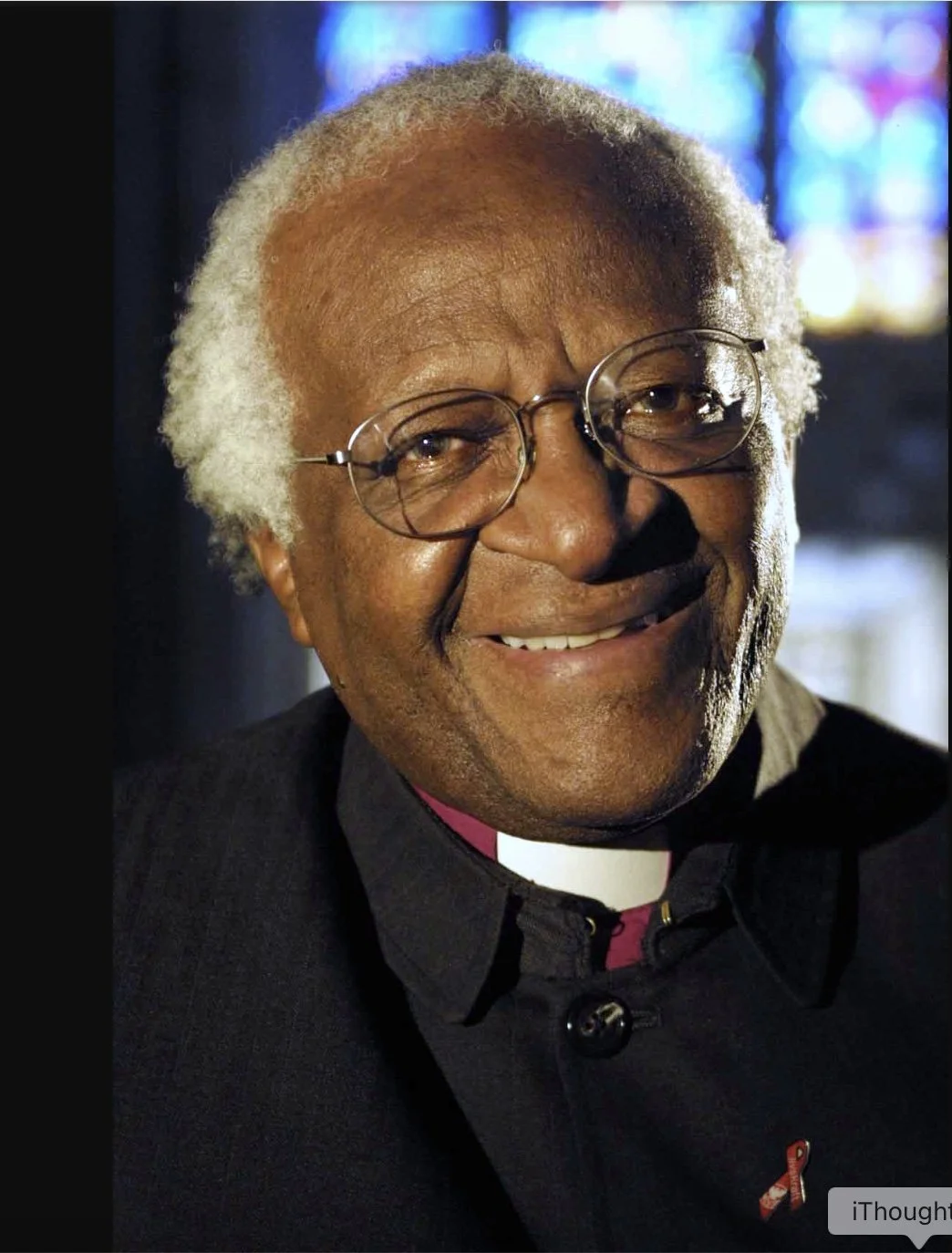
Desmond Tutu
South African Archbishop: prophetic voice against apartheid, winning the Nobel Peace Prize in 1984. Chaired South Africa’s Truth and Reconciliation Commission: modelling mercy, justice, and healing rather than revenge. Despite constant harassment and death threats, he became a global moral conscience — not just for South Africa, but for issues like climate change, LGBTQ+ rights, and peace-building. His legacy: a joy-filled elder, whose laughter and playfulness were as important as his prophetic seriousness.
Pause and reflect
What would I like people to experience in my company?
What care am I ready to offer—and what care might I allow myself to receive?
What legacy would I like to leave?
A small practice
Choose one modest act of connection: express appreciation, ask for help, share something useful or give someone your unhurried attention.
A quiet practice for the further journey
At the end of a day, take a few minutes to settle. You might sit quietly, pray, breathe gently or write.
Consider:
What gave me life today?
What was difficult, and what needs kindness?
Where did I listen or act with care?
What might I release for tonight?
What is one small intention for tomorrow?
Choose just one question if that is enough. The purpose is to grow familiar with your life and the person you are becoming.
The 5 step Daily Examen may also be a helpful practice here.
An encouragement for the road
You do not need to arrive at a perfectly resolved version of yourself.
You may still feel ambitious, uncertain, disappointed or afraid. You may be beginning again in circumstances you would never have chosen.
There is room for all of this on the further journey.
Perhaps, today, wisdom takes the form of listening a little longer. Perhaps it means speaking honestly, receiving kindness or letting yourself enjoy something beautiful. Perhaps it means resting. Your life can continue to deepen through these ordinary moments.
And sometimes it helps to reflect on what success actually means for me - What am I striving for? What am I comparing myself against?
Ralph Waldo Emerson's famously attributed definition of success describes it not through wealth or status, but through personal character, joy, and positive impact on others.
To laugh often and love much; To win the respect of intelligent people and the affection of children; To earn the approval of honest critics and endure the betrayal of false friends; To appreciate beauty; To find the best in others; To give of one's self; To leave the world a bit better, whether by a healthy child, a garden patch, or a redeemed social condition; To have played and laughed with enthusiasm and sung with exultation; To know even one life has breathed easier because you have lived . . . This is to have succeeded.